
The weakest emergency kit is the one that depends on everything working normally: cell service, wall power, home Wi-Fi, full phone battery, and the exact charger you forgot in another bag. A better kit has layers. One layer gets information. One keeps a phone alive. One lets you use available outlets safely when you are away from home.
This guide is not a survival fantasy. It is a practical buying guide for outages, storms, camping weekends, road trips, rental houses, and travel days where power and information are less predictable than usual.
The three-job kit
| Job | Product to compare | Why it belongs | Limit to respect |
|---|---|---|---|
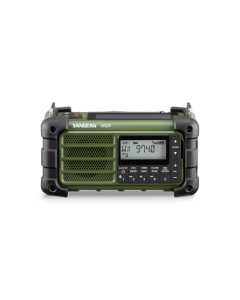
| Receive alerts and radio information | Sangean MMR-99 Multi-Powered Weather Alert Radio | NOAA weather channels, AM/FM, Bluetooth, crank, solar, USB-C and 18650 battery support | Its USB-A phone output is emergency backup, not fast everyday charging. |
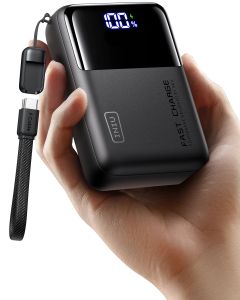
| Keep larger devices alive | INIU Cougar P63 25,000mAh Laptop Power Bank | 25,000mAh capacity and 100W-class USB-C power for bigger travel and work devices | Battery rules, cables and device draw decide the real result. |
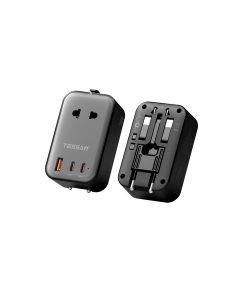
| Use unfamiliar outlets during travel | TESSAN Ultra Thin Universal Travel Adapter PD 20W | Compact adapter with AC outlet, two USB-C ports and one USB-A port | It only handles plug compatibility; voltage compatibility is still on the device. |
Why the radio comes first
The Sangean MMR-99 is the first product to compare because information changes decisions. During a storm or outage, the phone is useful only while it has power, signal, and working networks. A NOAA-capable weather radio gives you a separate path for official warnings and updates.
For a preparedness kit, the useful detail is coverage and alert behavior, not just the word “weather” on the box. Confirm that the radio receives the NOAA channels relevant to your area and that its alert/weather features match how you plan to use it. Then keep it somewhere boring and reachable: not buried under camping gear, not dead in a drawer.
Why the power bank is a separate decision
The Sangean can provide small-device emergency charging, but that is not the same thing as travel power. If your phone, hotspot, laptop, camera, or tablet matters during an outage, compare a bigger bank like the INIU Cougar P63.
The power-bank decision should be concrete. Count the devices you need for one day, then check USB-C wattage, cable ratings, and the battery rating on the unit. If the kit travels by air, verify the current battery policy before the trip; a useful backup purchase should not become a security-counter argument.
Why the adapter is not optional for some trips
The TESSAN Ultra Thin Universal Travel Adapter PD 20W is not emergency gear in the storm-radio sense. It becomes emergency-adjacent when you are abroad, in a hotel, on a cruise, or in a borrowed space and the outlet is the problem. A compact adapter can be the difference between using the power you have and staring at the wrong plug shape.
The device label still matters. TESSAN’s official page says to confirm that devices support 100V–250V dual voltage before use. For phones, tablets, laptops and chargers that already support dual voltage, that is usually the normal travel flow. For hair dryers and single-voltage appliances, do not guess.
How I would set it up
- Put the Sangean radio in a known home location and charge/test it before storm season.
- Keep one USB-C cable and one USB-A cable with the radio or power kit, not somewhere else.
- Use the INIU bank for devices that actually need larger backup power.
- Use the TESSAN adapter for travel outlets, not as a voltage converter.
- Review the kit twice a year: battery level, cable condition, local alert coverage, and current travel rules.
FAQ
Can a weather radio replace phone alerts?
No. Treat it as an additional layer, not a replacement. Phone alerts, local emergency systems, radio, and official forecasts all have different failure points.
Is hand-crank charging enough for normal phone use?
No. Hand-crank or radio-based charging is usually emergency backup. For normal phone or laptop runtime, a dedicated power bank is the more realistic tool.
Should an emergency kit include a travel adapter?
For a home-only kit, maybe not. For international travel, cruises, hotels, hostels, study abroad, or work trips, an adapter can be essential because the wall power may be available but physically incompatible.
How often should I check the kit?
Twice a year is a practical rhythm. Check charge level, cables, battery condition, radio reception, firmware/app requirements for connected devices, and whether any battery has swelling, damage, or recall concerns.
The bottom line
The useful kit has separation of duties: radio for information, power bank for runtime, adapter for outlets. That is less dramatic than “survival gear,” but far more likely to help during the ordinary outages and travel problems people actually face.
Reference points checked: NOAA Weather Radio All Hazards, Ready.gov preparedness guidance, FAA PackSafe battery guidance.
As an Amazon Associate we earn from qualifying purchases.
Comments