
Short answer: “AI voice gadget” is now too broad a category to buy from the headline alone. A wearable recorder, AI earbuds, a wireless creator microphone and translator earbuds can all start with spoken audio, but the useful output is completely different. The right choice depends on whether you need meeting memory, action from conversations, cleaner content audio or live translation.
That is why this guide now compares four distinct workflows: PLAUD NotePin S for dedicated meeting capture, viaim Rise for AI earbuds that record and organize conversations, DJI Mic Mini for creator audio, and Timekettle W4 Pro for live interpretation.
The fast buying map
| Your actual problem | Best starting point | What you are really buying | Main caveat |
|---|---|---|---|
| You leave meetings with incomplete notes | PLAUD NotePin S | A dedicated wearable capture device tied to transcription, summaries and note workflows. | You still need consent, transcript review and a plan for storing recordings. |
| You want normal earbuds that can capture meetings and turn them into ongoing AI project context | viaim Rise | AI earbuds plus a smart case that can record independently, with project organization and optional AI handoff. | It is a crowdfunding product and part of its value depends on the software/service layer. |
| Your videos, interviews or demos sound bad | DJI Mic Mini | A lightweight wireless microphone system designed to improve source audio. | It does not organize your meetings or translate conversations by itself. |
| You work or travel across languages | Timekettle W4 Pro | Interpreter earbuds designed around live translation rather than meeting memory. | Consumer translation is not a substitute for professional interpretation in high-stakes situations. |
| You want “one device for everything” | Define the output first | Write down whether your priority is notes, actions, clean audio or translation. | The most feature-rich gadget can still be the wrong workflow. |
Why AI voice recorder is now a category, not one product
The first wave of AI recorders was easy to understand: record a conversation, transcribe it, summarize it. The newer generation is becoming more fragmented. Some devices are dedicated recorders. Some are earbuds. Some add “agent” language and promise to turn conversations into tasks or drafts. Others focus on real-time translation. Traditional wireless microphones remain better when the real job is producing clean audio for content.
This matters because the hardware can look deceptively similar. A microphone, an earbud case and a wearable recorder all contain microphones and batteries. But they optimize for different things: capture distance, wearability, call audio, continuous recording, transcription workflow, speaker separation, export, translation or low-latency wireless transmission.
Buying by the word “AI” usually means paying for features you do not need. Buying by the final output is much easier.
viaim Rise changes the comparison
viaim Rise is the reason this category now needs a fourth lane. It is not simply another set of wireless earbuds with a transcription button. The Indiegogo campaign positions Rise as AI Agent Earbuds: the earbuds can capture conversations, while the smart case can record on its own even when the earbuds are not in your ears.
The workflow then moves beyond a single transcript. viaim's Project Space is designed to keep multiple conversations connected to the same project, detect what changed between sessions, and turn that evolving context into editable outputs. The campaign also promotes handoff to AI platforms such as ChatGPT, Claude and Gemini after the user confirms the action.
That makes Rise conceptually different from a dedicated recorder. PLAUD asks, “How do we capture and remember this conversation?” Rise asks, “How does this conversation become the next piece of work?”
The current campaign lists a Super Early Bird price around $259 against a planned $399 retail price, with three months of viaim Pro included. After that, the account moves to the free Basic tier unless you choose a paid plan. Expected fulfillment starts around November 2026, with the campaign showing a broader shipping window into January 2027.
Check the current viaim Rise campaign, reward tiers and service terms →
viaim Rise vs PLAUD NotePin S: earbuds or dedicated recorder?
This is the comparison most people should make if their real problem is meeting memory. Both products are built around capturing spoken information and turning it into organized text, but the hardware philosophy is different.
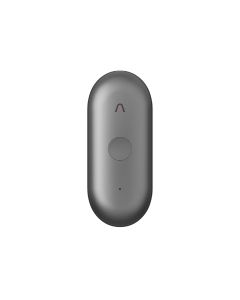
PLAUD NotePin S is intentionally simple: it is a wearable recorder. The official product page lists 64 GB storage, two MEMS microphones, up to 20 hours of continuous recording, 40 days of standby and multiple wearing styles. PLAUD also includes transcription minutes on its Starter plan and structures the experience around notes, templates, summaries and highlights.
Rise tries to replace two devices at once. You can use the earbuds for ordinary audio and calls, then use the same ecosystem to capture work conversations. The smart case adds an important twist because it can keep recording without requiring you to wear the earbuds for the whole meeting.
If you want the least ambiguous tool for “press record, capture meeting, review transcript,” PLAUD is easier to reason about. If you already wear earbuds for most of the workday and want meeting capture to become part of a larger AI project workflow, Rise is the more ambitious design.
The risk is also different. PLAUD is a mature retail product you can evaluate today. Rise is still crowdfunding hardware whose value depends heavily on viaim's software execution, subscription structure and long-term integrations.
PLAUD NotePin S: best when the note itself is the product
PLAUD NotePin S remains the cleanest answer for someone who says, “I forget what was decided in meetings.” It does not need to pretend to be an audio lifestyle product. Its reason to exist is capture.
The hardware is small enough to wear as a pin, clip, wrist accessory or lanyard. One-press recording and press-to-highlight make sense for interviews, client calls, lectures and recurring meetings where the device needs to disappear into the workflow rather than become another screen.
The service layer is part of the purchase. Transcription, summaries, templates and AI outputs are where the raw recording becomes useful. That means you should look at monthly transcription allowances and paid-plan pricing before comparing only the hardware price.
PLAUD is strongest when your workflow ends in a searchable record: “What did the client say?”, “What action items came out of this?”, “What changed from the last call?” If you need better music playback or live translation, it is the wrong tool.
viaim Rise: best when the conversation should continue into work
Rise becomes more interesting when a transcript is not enough. The campaign focuses heavily on continuity: conversations belong to projects, projects evolve over time, and the AI layer should understand the difference between what was said last week and what changed today.
That is a more agent-like framing than ordinary meeting notes. A summary is static. A project context can be reused to draft a follow-up, update a plan or propose a next action. The important word is propose: we would still want human confirmation before any meeting recorder starts sending messages or creating tasks on its own.
This is also why subscription cost matters. A hardware-only comparison misses the point. If the project memory, AI integrations and cross-device software are the reason to buy Rise, then the ongoing service quality is part of the product just as much as the earbuds.
The campaign includes three months of Pro with the Super Early Bird tier, and sells discounted annual Pro and Ultra add-ons. Before backing, check what remains available on the free Basic plan and which workflows require a paid tier.
DJI Mic Mini: best when the source audio is the bottleneck
The DJI Mic Mini belongs in this guide because many people searching for an AI recorder do not actually need AI. They need a microphone that puts the capsule closer to the speaker.
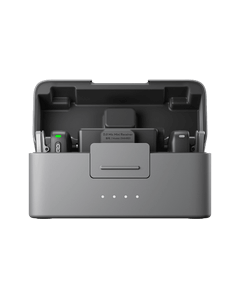
For videos, product demos, interviews, travel content and social clips, cleaner source audio has more value than an AI summary. DJI lists a transmitter around 10 g, omnidirectional pickup, two-level noise cancelling and long battery life with the charging case. A receiver can handle multiple transmitters for interview-style setups.
You can always transcribe good audio later. You cannot fully recover a badly clipped, distant or noisy recording simply by adding AI after the fact. That makes a wireless mic the rational purchase when the final deliverable is media rather than meeting memory.
Timekettle W4 Pro: best when language is the problem
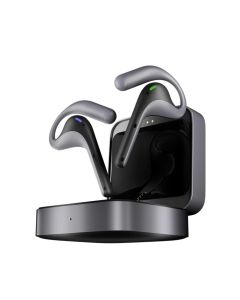
The Timekettle W4 Pro AI Interpreter Earbuds sit in a fourth category: real-time language assistance. The official product page lists support for dozens of languages and accents, multiple translation modes, phone calling and normal media playback.
The point is not to remember the meeting afterward; it is to understand the other person during the conversation. That changes how you judge the device. Language coverage, latency, microphone pickup, comfort and online/offline behavior matter more than summary templates.
Translator earbuds are useful for travel, trade shows and ordinary multilingual collaboration. They should not be treated as professional interpretation for medical, legal, safety-critical or contractual decisions where a mistranslation can have serious consequences.
AI earbuds vs AI voice recorder: the workflow test
If you are torn between Rise and PLAUD, ask five questions:
- Do you already wear earbuds for most calls? If yes, Rise integrates more naturally into your workday.
- Do you want the recorder to disappear when you are not listening to audio? PLAUD is simpler and more dedicated.
- Do you need a meeting archive or a project workspace? PLAUD leans toward the first; Rise is trying to build the second.
- How much do you care about subscriptions? Both ecosystems attach AI services to hardware, so compare free-tier limits and recurring cost.
- Are you buying today or backing early hardware? PLAUD is available retail; Rise still carries crowdfunding execution risk.
What about AI translator earbuds?
Searches for “AI earbuds” are increasingly mixed with translator products. That can create bad buying decisions because “AI earbuds” describes the technology, not the job.
viaim Rise is primarily about work conversations, meeting capture and AI context. Timekettle W4 Pro is primarily about crossing language barriers. They may both transcribe speech, but that overlap does not make them interchangeable.
If you need real-time translation, start with the language pair and usage scenario. If you need meeting memory in your native language, start with recording quality, transcription workflow and note organization.
The subscription question matters more than the hardware price
AI recording products increasingly behave like hardware gateways into an ongoing service. That is not automatically bad — transcription, summarization and model inference cost money — but it means the sticker price is only part of the ownership cost.
Before buying, check four things: how many transcription minutes the free tier includes, whether advanced summaries require a paid plan, whether exports remain available without a subscription, and what happens to your recordings if you downgrade.
viaim currently bundles three months of Pro with its Super Early Bird Rise tier and offers discounted annual Pro and Ultra plans as campaign add-ons. PLAUD includes a Starter allowance and sells higher plans for heavier transcription use. Those details can change, so the live service pages matter more than an old review screenshot.
A good rule is simple: if the product becomes dramatically less useful without a subscription, treat one year of service as part of the purchase price when comparing alternatives.
Privacy, consent and data handling are not optional details
Every device in this category can create records of other people's voices. That is the feature and the risk. Before recording a meeting, interview, client call or workplace conversation, check the rules that apply to your location, employer and industry.
Good practice is straightforward: tell people before recording, explain why the recording is being made, use the narrowest retention period you actually need, restrict access to transcripts, and review AI-generated summaries before they become part of a decision or shared document.
If your work involves legal, medical, HR, financial or confidential customer information, do not assume a consumer AI recorder is approved just because it is technically convenient. Your organization's policy, contractual obligations and local law may matter more than the device's feature list.
The same applies to “agent” workflows. A recorder that can propose a follow-up draft is useful. A recorder that sends something externally without a human checking it would create a very different risk profile. Human confirmation should remain part of the loop.
Which device for meetings?
For meetings, the default ranking is simple:
- PLAUD NotePin S if you want a dedicated, low-friction meeting memory device.
- viaim Rise if you already live in earbuds and want meeting capture tied to project context and AI actions.
- DJI Mic Mini if the meeting is actually an interview or recorded production where audio quality matters more than summaries.
- Timekettle W4 Pro if understanding the other language in real time is the primary problem.
The wrong choice often comes from confusing “meeting audio” with “meeting workflow.” A microphone captures sound. A recorder creates memory. An interpreter helps the conversation happen. Rise is trying to bridge capture and workflow in one product.
Which device for interviews?
Interviews split into two kinds. If the output is an article, research note or internal summary, PLAUD or Rise can reduce the time spent turning speech into text. If the output is a video or podcast, DJI Mic Mini is the stronger first purchase because the quality of the source recording becomes part of the final product.
You can also combine tools. A creator can use a wireless mic to capture clean interview audio and run transcription afterward. There is no rule that the device doing the best capture must also be the device doing the AI summary.
That separation is often healthier because it prevents the workflow from being locked to one hardware company's subscription forever.
Which device for travel?
For travel, the answer depends on whether the friction is language or memory. Timekettle W4 Pro makes sense when conversations across languages are the recurring problem. Rise can be attractive for business travel because the same earbuds handle normal listening, calls and meeting capture. PLAUD is more discreet if you want a separate recorder that does not occupy your ears.
For travel creators, DJI Mic Mini remains the more direct tool: better voice capture for walk-and-talk video, interviews and clips. A transcript is useful later, but viewers hear the microphone first.
Which device for sales and client work?
Sales calls and client meetings are where AI recorders can create the most value and the most risk. The value is obvious: decisions, objections, next steps and commitments become searchable instead of living in memory.
PLAUD is strong when you want a clean meeting record. Rise is interesting when you want multiple conversations with the same account or project to build shared context over time. But client-facing use also raises consent and confidentiality questions, so the workflow should be approved before the hardware is rolled out broadly.
Do not let an AI summary become the only record of a commercial commitment. Keep the original recording where appropriate, verify important facts and distinguish between what was actually said and what the model inferred.
What should most people buy?
Most people do not need four devices. They need to identify their bottleneck:
- “I forget decisions.” Start with PLAUD NotePin S.
- “I live in calls and want conversations to become project context.” Watch viaim Rise closely.
- “My videos sound amateur.” Buy DJI Mic Mini.
- “I cannot follow conversations in another language.” Buy Timekettle W4 Pro.
If none of those sentences feels like your actual problem, your phone may already be enough. The worst purchase in this category is buying an “AI recorder” because the category is fashionable and then discovering that you had no recurring recording workflow in the first place.
FAQ
What is the best AI voice recorder for meetings?
PLAUD NotePin S is the most straightforward dedicated choice in this group because it is built around wearable recording, transcription and summaries. viaim Rise is more interesting if you specifically want earbuds plus project context and AI handoff.
What are AI earbuds?
“AI earbuds” is a broad label for earbuds that add functions such as transcription, meeting summaries, translation or voice-assistant workflows. The term does not tell you which problem the product solves, so check whether the product is optimized for meetings, translation or ordinary audio.
Can viaim Rise record without the earbuds in your ears?
Yes. The campaign says the smart case can record on its own, which is useful for face-to-face meetings where you do not want to wear earbuds throughout the conversation.
How much does viaim Rise cost?
The current Indiegogo Super Early Bird tier is around $259 against a planned $399 retail price, with three months of viaim Pro included. Reward availability and service pricing can change.
Does viaim Rise work with ChatGPT, Claude and Gemini?
The campaign positions Rise as able to hand confirmed tasks or outputs into AI platforms including ChatGPT, Claude and Gemini. Treat this as an evolving software workflow and verify the exact integrations available when your unit ships.
Is PLAUD NotePin S better than viaim Rise?
PLAUD is better if you want a dedicated recorder with a simple meeting-memory workflow today. Rise is more ambitious if you want earbuds, independent case recording and project context that can continue into AI-assisted work. The trade-off is that Rise is still crowdfunding hardware.
Can DJI Mic Mini replace an AI voice recorder?
It can replace the capture part if your priority is clean audio, but it does not replace a recorder's note organization, summaries and meeting workflow. For creators, that may be completely fine because transcription can happen later in software.
Are AI translator earbuds the same as AI meeting earbuds?
No. Translator earbuds prioritize understanding speech across languages in real time. Meeting earbuds prioritize recording, transcription, summaries and workflow. Some features overlap, but the core job is different.
Do AI voice recorders require a subscription?
Many include a free tier and sell higher allowances or advanced features through paid plans. Check transcription limits, export rights and what remains functional after cancelling before you buy the hardware.
Is it legal to record meetings with an AI recorder?
Rules vary by location and situation. Workplace policy and contractual obligations can also apply. Notify participants and check the relevant rules before recording; for high-stakes professional use, get appropriate legal or compliance guidance.
What is better for interviews: PLAUD, viaim Rise or DJI Mic Mini?
For text-based interviews, PLAUD or Rise can reduce transcription work. For video or podcast interviews, DJI Mic Mini is the better first tool because clean source audio matters to the final audience.
The useful verdict
Do not buy an AI voice gadget until you can finish this sentence: “After the conversation, I need ____.”
If the blank is “a reliable searchable record,” choose PLAUD NotePin S. If the blank is “project context and a next action,” viaim Rise is the most interesting new concept in this comparison. If the blank is “cleaner audio,” choose DJI Mic Mini. If the blank is “understanding another language,” choose Timekettle W4 Pro.
Rise is the product to watch because it tries to combine ordinary earbuds, independent meeting capture and an agent-like work layer. But it should not make PLAUD, DJI or Timekettle obsolete, because those products are optimized around different outputs.
The category is getting bigger because voice is becoming an input to software, not just an audio file. The winners will be the devices that make the next step simpler without hiding the cost, privacy trade-offs or the need for human review.
View the current viaim Rise campaign →
Sources checked October 6, 2026: viaim Rise Indiegogo campaign, PLAUD NotePin S official product page, DJI Mic Mini official specifications, and Timekettle W4 Pro official product page.
As an Amazon Associate we earn from qualifying purchases on eligible linked products.
Comments