
Tesla's Supercharger network covers the major corridors well, but road trips eventually take you somewhere that only has a hotel parking lot with a Level 2 J1772 station and no Supercharger within thirty miles. That is exactly when the J1772 adapter earns its place in the glovebox.
This guide is for Tesla owners who want to understand what the adapter actually delivers at real-world stops — not theoretical maximums — and how to build a sensible travel charging kit without overthinking it.
Quick snapshot
| What J1772 covers | All non-Tesla public Level 2 chargers in North America (hotels, parking garages, destination chargers) |
|---|---|
| Max speed via J1772 adapter | ~19–40 mph of range depending on the Tesla model and EVSE output |
| Does it work at DC fast chargers? | No — J1772 is AC-only. DC fast charging requires a CCS or CHAdeMO adapter (separate) |
| Tesla adapter included | Yes — Tesla ships a J1772 adapter with new vehicles; third-party options add redundancy |
| When it matters most | Overnight hotel charging, destination chargers at restaurants, slower top-ups at parking garages |
Featured product
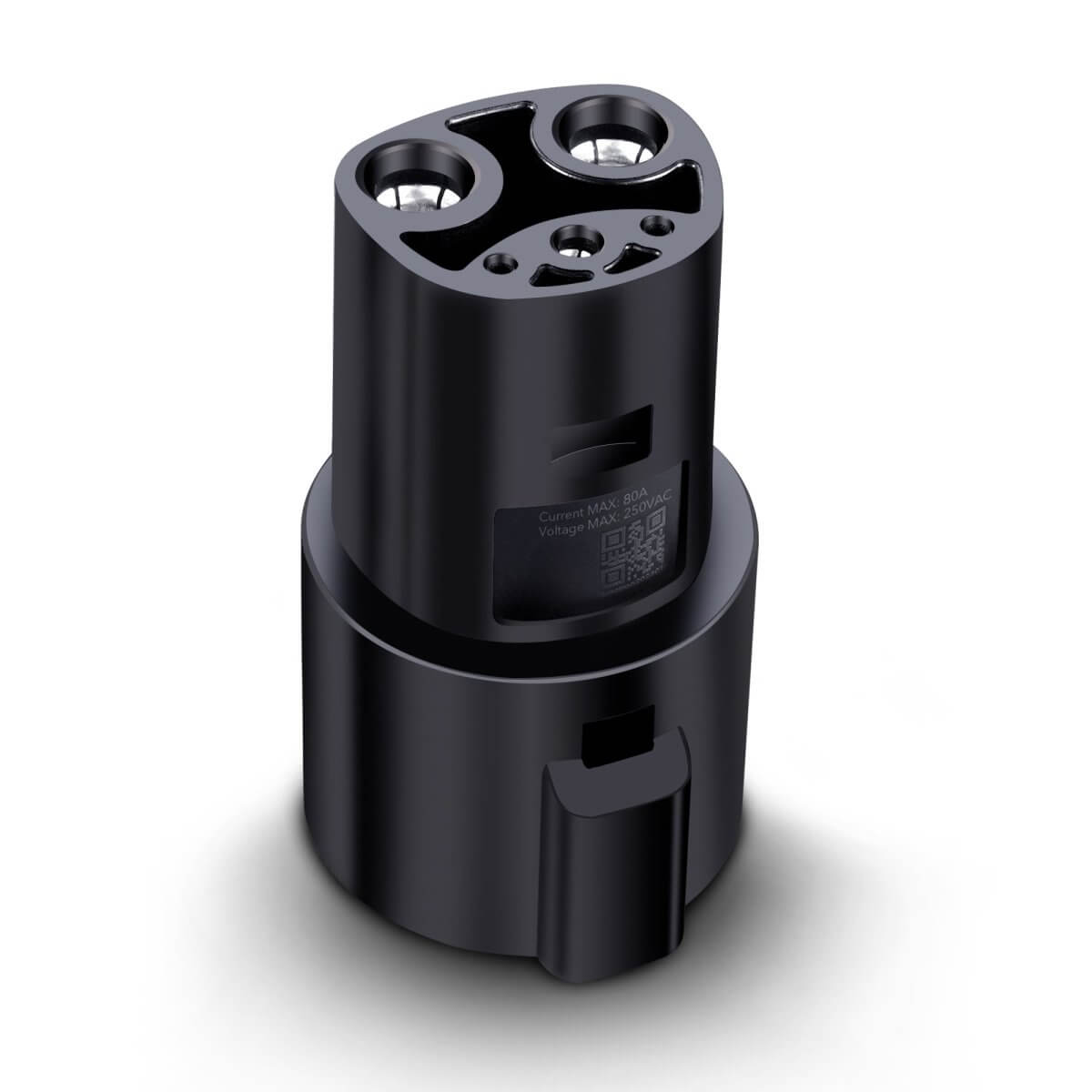
Lectron J1772 to Tesla EV Adapter
Lectron J1772 to Tesla EV Adapter is built for Tesla drivers who want cleaner access to compatible J1772 charging stations at home, work, or on the road.
Why this angle works
- Every new Tesla includes a J1772 adapter from the factory, but a backup is worth carrying — losing the only adapter on a road trip is a bad situation.
- Hotel and destination charger speeds range from 3.3 kW to 11.5 kW at most Level 2 stations, adding 12–40 miles of range per hour depending on the car and EVSE output.
- The adapter does not unlock DC fast charging — that remains Tesla Supercharger or CCS-only depending on the vehicle model.
- Third-party J1772 adapters are available at lower cost but vary significantly in build quality and thermal performance — a corner worth not cutting.
Who this is best for
- Tesla owners doing multi-day road trips who want to maximise overnight charging opportunities at hotels without Superchargers.
- Buyers building a travel charging kit and wanting to understand which adapters are genuinely necessary versus nice-to-have.
- Readers comparing the official Tesla adapter against third-party options before replacing a lost or damaged unit.
What to watch before you buy
- Not all J1772 Level 2 stations are equal: some hotel chargers are only 3.3 kW (adding ~12 miles per hour) while commercial destination chargers can push 7.2–11.5 kW. Check the EVSE output before planning your overnight stop.
- The J1772 to Tesla adapter is a mechanical and electrical bridge — never use a visibly damaged adapter, as connector fit and thermal protection matter at sustained charging sessions.
- If you own a newer Tesla with NACS native port, a J1772 adapter is still needed for non-Tesla Level 2 stations until NACS becomes widely deployed at third-party networks.
What a J1772 Level 2 stop actually adds overnight
The realistic math for a hotel overnight: plug in at 10 PM, check out at 8 AM — that is ten hours. At a 7.2 kW charger (the most common hotel EVSE output), a Model 3 Long Range adds roughly 50–60 miles of range. At a slower 3.3 kW hotel station, that drops to about 25–30 miles.
For most road trip scenarios, this is not a primary range source — it is a buffer. You arrive with 30–40% charge, and you leave with 50–70% without touching a Supercharger. That kind of margin makes the next leg of the trip more comfortable even if the numbers are not dramatic.
- 7.2 kW hotel charger (common): ~50–60 miles added per 10-hour overnight.
- 11.5 kW destination charger (less common but exists at newer hotels): ~75–90 miles overnight.
- 3.3 kW slow hotel charger (older installations): ~25–30 miles overnight — useful buffer, not a full recharge.
Building a sensible travel charging kit
For most Tesla road trips, the J1772 adapter plus the factory mobile connector cable covers 90% of non-Supercharger scenarios. The mobile connector adds the ability to charge from a standard 120 V outlet as a last resort — a slow option, but a real one.
Beyond that, a CCS adapter is worth knowing about for Tesla Model 3 and Y owners who want access to Electrify America and EVgo fast chargers outside the Supercharger network. That is a separate purchase and a separate use case from the J1772 Level 2 adapter.
- Always in the glovebox: J1772 adapter (factory or quality third-party backup).
- Worth adding: mobile connector cable for 120 V emergency charging.
- Situational: CCS adapter for access to non-Tesla DC fast chargers (Model 3/Y specific).
Watch the related video
FAQ
Do I need a J1772 adapter if I have a Tesla with a NACS native port?
Yes, until NACS deployment at third-party Level 2 networks is widespread. Most hotel chargers, parking garage chargers, and destination chargers in the US still use J1772 connectors. A J1772 adapter remains part of a complete travel kit for the foreseeable future.
Can I charge my Tesla at a ChargePoint or Blink Level 2 station with a J1772 adapter?
Yes. ChargePoint, Blink, EVgo Level 2, and most hotel destination chargers use J1772 connectors. The Tesla J1772 adapter works at all of them. Note that some of these networks require an account or RFID card to activate the charger.
Are third-party J1772 to Tesla adapters safe?
Quality third-party adapters from reputable brands are safe for normal use. The risk with budget adapters is inconsistent thermal protection and loose connector fit, which can cause slow or interrupted charging sessions. For a component that handles sustained current transfer, buying a known brand is worth the price difference.
What is the difference between J1772 and NACS for EV owners?
J1772 is the older North American AC charging standard used by all non-Tesla public Level 2 chargers. NACS (now formally SAE J3400) is the connector originally designed by Tesla that is being adopted by Ford, GM, Rivian, and others. If your vehicle has a NACS port natively, you can use Tesla Superchargers directly but still need a J1772 adapter for other Level 2 networks.
Final take
The J1772 adapter is one of the quietest but most useful items in a Tesla owner's travel kit. It does not make headlines, but it turns a long list of destination chargers from "unavailable" into "good enough for the night." That is worth knowing before the trip, not during it.
One adapter, one cable, most scenarios covered
A J1772 adapter and a mobile connector handle the vast majority of non-Supercharger charging situations a Tesla road trip throws at you. The kit fits in a small bag in the trunk and stays there permanently.
- Carry a backup J1772 adapter if you road trip regularly — losing the only one is a stressful situation.
- Check the EVSE output at your hotel before you plan on a full overnight top-up.
Comments