
Most hardware wallet comparisons spend too much time on specs and not enough on what the daily routine actually feels like after setup. That is the version worth reading.
This guide is for buyers who have already accepted that a hardware wallet is the right next step and just want to know which one fits how they actually use crypto. Both Ledger Nano X and Trezor Safe 3 are solid choices. The difference shows up in the details.
Quick snapshot
| Best for first-timers | Trezor Safe 3 — open-source firmware, calmer desktop-first setup |
|---|---|
| Best for mobile users | Ledger Nano X — Bluetooth, polished mobile app |
| Open-source firmware | Trezor only |
| Seed phrase standard | BIP-39 (both — fully portable between devices) |
| Typical street price | Both under $90 at time of writing |
Featured product
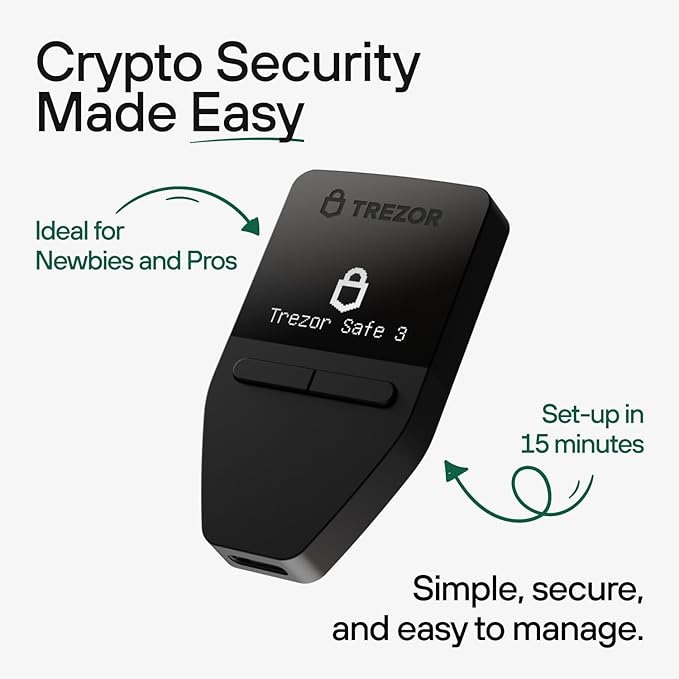
Trezor Safe 3 Hardware Wallet
Trezor Safe 3 is a hardware wallet for buyers who want stronger crypto self-custody with a cleaner setup than leaving assets on a hot wallet.
Why this angle works
- Trezor Safe 3 runs fully open-source firmware — buyers can verify what the device is doing, not just trust the brand.
- Ledger Nano X wins on mobility: Bluetooth pairing and a strong mobile app make it the right call for on-the-go signers.
- Both support hundreds of coins, but Trezor Suite (desktop) tends to feel more approachable for first-time daily use.
- Ledger's 2023 Recover incident raised fair questions about closed firmware philosophy — that context belongs in any honest comparison.
Who this is best for
- First-time buyers moving away from exchange custody who want a setup flow that does not feel overwhelming.
- Mobile-first crypto users who need to approve transactions without sitting at a desktop.
- Readers who care about firmware transparency and want to understand why open source matters before they spend money.
What to watch before you buy
- Neither device protects you if the seed phrase is stored carelessly. The hardware is only one part of the equation.
- Ledger's Bluetooth feature is convenient but adds a wireless attack surface that some buyers prefer to avoid entirely.
- Both devices sit in a similar price range, so the decision should be based on routine fit, not price alone.
The real difference: how each device fits a daily custody routine
Trezor Safe 3 is the better match if you want to sit at a desktop, manage holdings deliberately, and avoid Bluetooth complexity. The setup is transparent, the interface is calm, and the open-source model gives technically curious buyers something to trust beyond brand reputation alone.
Ledger Nano X fits better when the routine involves moving between desktop and mobile. Bluetooth is genuinely useful if you check balances or approve transactions from a phone, and the Ledger Live mobile app is polished and well-maintained.
- Trezor: better for deliberate, desktop-centric custody habits and buyers who value auditability.
- Ledger: better for buyers who need mobile flexibility built into the same device.
- Neither choice is wrong. The question is which routine the buyer is actually building.
What the Ledger 2023 Recover incident means for new buyers
In 2023, Ledger introduced a firmware feature called Ledger Recover that caused significant community backlash. The controversy revealed that the device firmware could, under specific conditions, shard and export a seed phrase to third-party servers. Ledger clarified the feature was optional and paused its rollout.
For new buyers today, the most honest framing is this: the incident did not make Ledger devices unsafe to use. It did raise legitimate questions about the philosophy of closed firmware and what could change in future updates without community review. If that question matters to you, Trezor's fully open-source approach is a cleaner answer.
Seed phrases, backups, and what actually keeps crypto safe
The hardware wallet is the starting point, not the finish line. Both Ledger and Trezor use the BIP-39 seed phrase standard, which means the same 24-word phrase can restore your wallet on any compatible device if yours is lost, damaged, or stolen.
The practical implication: where and how that seed phrase is stored matters more than which device brand you choose. A fireproof offline backup is not optional.
- Never store the seed phrase digitally — no screenshots, no cloud notes, no password managers.
- Test recovery on a secondary device before sending any meaningful amount.
- The device protects your keys from online threats. The seed backup protects you from everything else.
FAQ
Which is easier to set up for a first-time buyer?
Both have guided setup flows. Trezor Suite tends to feel more approachable because it is USB-only — there is no Bluetooth pairing step that occasionally trips users up. For most first-timers, either works fine if they follow the setup guide carefully.
Is open-source firmware actually important for most people?
It matters most to buyers who want independent verification that the device does what it claims. For everyone else, the practical benefit is community accountability: open-source firmware reduces the risk of undisclosed behaviour in future updates, because anyone can audit the code.
Can I switch from Ledger to Trezor (or vice versa) later?
Yes. Both devices use the BIP-39 seed phrase standard. If you set up one and later want to migrate, you can restore your full wallet on the other device using your existing 24-word seed phrase. The coins do not live on the device — they live on the blockchain.
Which one should I buy if I mostly hold Bitcoin?
Either works well for Bitcoin. If open-source simplicity and desktop-first custody are your priorities, Trezor Safe 3 is the natural fit. If you want mobile app flexibility and a broader multi-coin ecosystem, Ledger Nano X handles that well.
Do I need a hardware wallet if I only hold a small amount?
That is a personal decision, but the general principle holds at any amount: exchange custody means someone else controls the keys. A hardware wallet costs around $70–$90 and takes about 30 minutes to set up. If losing the amount you hold would hurt, it is worth the upgrade.
Final take
Hardware wallets work best when the buyer understands the routine that comes with one. Both Ledger Nano X and Trezor Safe 3 are honest answers to a real problem. A comparison earns its keep when it helps readers make that choice calmly — not impulsively.
Ready to pick one and actually start the setup?
Both devices are solid answers to the same problem. The one that fits your actual routine is the right choice — not the one with the more impressive spec list.
- Go with Trezor Safe 3 if open-source firmware and a calm desktop-first routine matter to you.
- Go with Ledger Nano X if Bluetooth and mobile-app flexibility are part of how you use crypto day to day.
Comments