
The appeal of a Ring Doorbell solar charger is obvious: mount it once and stop thinking about battery maintenance. Whether that promise holds up depends almost entirely on one variable — how much direct sun the front of the house actually gets.
This guide gives Ring Doorbell owners an honest setup framework. Not a vague "works great in sunny climates" disclaimer, but a practical breakdown of placement, expectations, and the scenarios where solar genuinely solves the problem versus where it only slows the drain.
Quick snapshot
| Minimum sun for trickle maintenance | 3–4 hours of direct sun per day |
|---|---|
| Realistic battery relief | Extends charge cycle from ~3 months to 6–12+ months in good sun |
| Works best with | Ring Video Doorbell (2nd gen), Ring Video Doorbell 3 and 4, Ring Doorbell Plus |
| Biggest failure mode | North-facing doors, heavy shade, or winter sun angles below 20° |
| Install difficulty | Low — one screw attachment, existing doorbell wiring not required |
Featured product
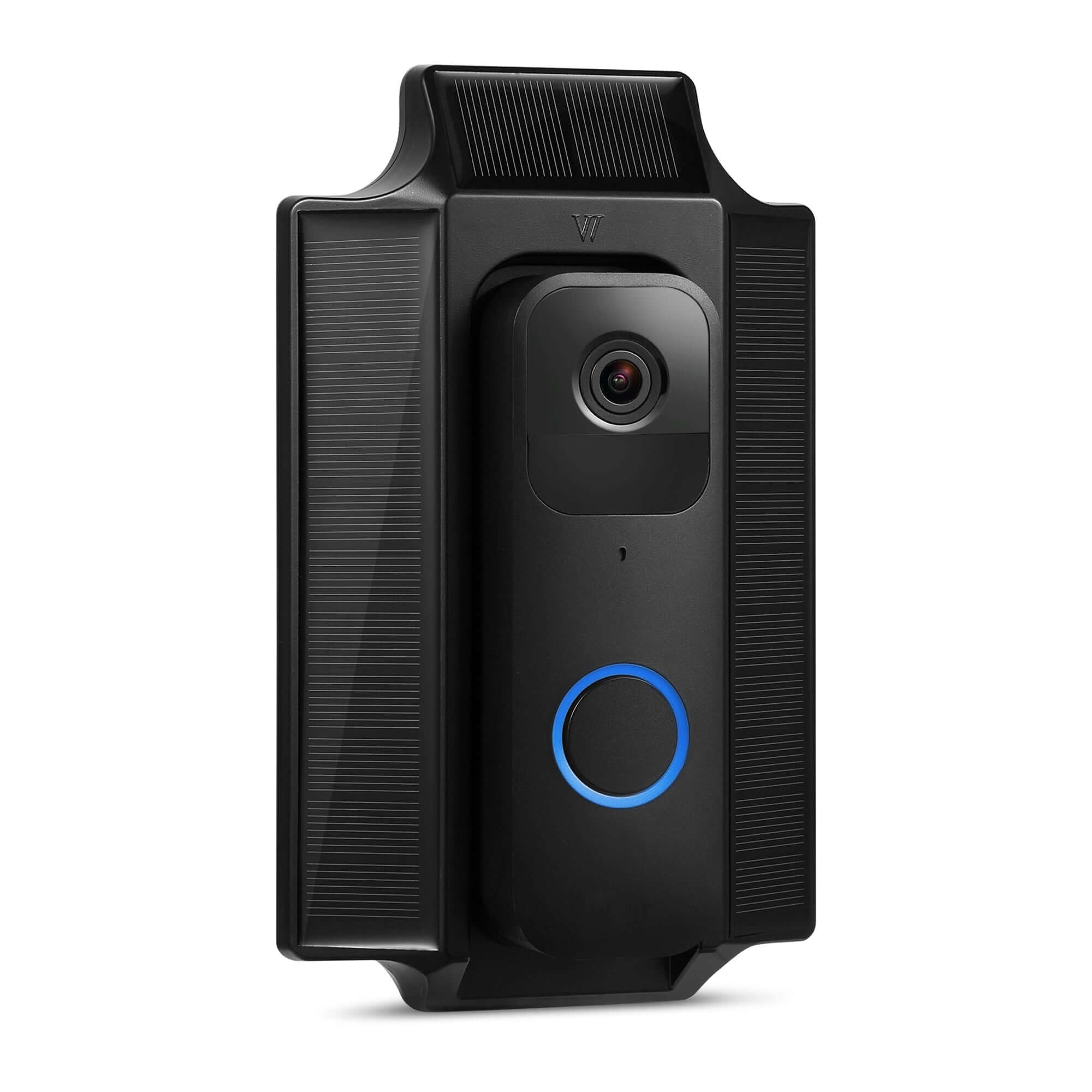
Wasserstein Doorbell Solar Charger
Wasserstein Doorbell Solar Charger collects compatible variants under one product page so the shopper can pick the right setup before jumping to the merchant.This family is useful for desks, nightstands, charging corners and smart-home setups where t
Why this angle works
- Works reliably as a trickle-maintenance solution when the doorbell gets 3–4+ hours of direct sun daily.
- Eliminates the every-three-month manual charge cycle for well-placed installs in high-sun environments.
- One-screw attachment and magnetic connector make installation and seasonal removal genuinely easy.
- Honest about its limits: deep shade, north-facing doors, and cloudy winters will still require periodic manual charging.
Who this is best for
- Ring Doorbell owners who find manual charging annoying rather than catastrophic but want a low-friction fix.
- Buyers with south or west-facing front doors who already know their porch gets good afternoon sun.
- Readers comparing solar against wired installation as a permanent power solution.
What to watch before you buy
- Solar trickle charging extends battery life but does not necessarily eliminate manual charging in low-sun seasons.
- The panel angle matters: the charger mounts at the same angle as the doorbell, which is rarely the optimal sun angle.
- Activity volume affects the equation — a doorbell that triggers 50+ times a day uses more power than solar can reliably replace in most conditions.
- The anagramshop product page is a family page, so Ring buyers should choose the Ring compatibility option before clicking through to the merchant.
The sun exposure question most install guides skip
Most Ring solar charger reviews test in good conditions and call it a day. The more useful question is what happens at the edge cases: overcast winters, partial shade from a porch overhang, or a doorbell mounted on a covered entryway.
The practical benchmark is three to four hours of direct sunlight per day, not ambient light. A doorbell mounted under a deep porch roof may receive bright indirect light all day and still not generate enough current to offset normal battery use. The panel needs direct, unobstructed sun.
- South-facing doors in most of the US: solar will likely keep the battery in maintenance range year-round.
- East or west-facing doors: solar helps but may not fully offset heavier-use periods.
- North-facing or heavily shaded installs: solar will slow discharge but manual charging is still needed.
Placement, angle, and the one adjustment most people miss
The Ring solar charger attaches to the same mounting plate as the doorbell and angles with it. Most doorbells are installed vertically or slightly angled toward foot traffic, not optimised for solar collection. In practice this means the panel captures less energy than a flat roof-mounted panel at the same location.
The practical workaround is choosing the mounting angle that best balances solar collection and doorbell view angle — a small adjustment of five to ten degrees downward can meaningfully improve winter sun capture in mid-latitude climates.
Watch the related video
FAQ
Which Ring Doorbell models is the solar charger compatible with?
Ring makes solar accessories for Ring Video Doorbell (2nd gen and later), Ring Video Doorbell 3, 3 Plus, 4, and Ring Doorbell Plus. It is not compatible with the wired-only Ring Video Doorbell Pro or Pro 2, which use hardwired power. Always check the compatibility list on the product page before ordering.
Does the Ring solar charger fully charge a dead battery?
No. The Ring solar charger is designed for trickle maintenance, not recovery charging. If the battery is fully depleted, you still need to remove it and charge it manually via USB before solar maintenance can take over again.
Will it work in winter or on cloudy days?
It generates some power on overcast days but significantly less than in direct sun. In high-latitude winter conditions with short days and low sun angles, the solar panel may only slow the battery drain rather than fully offset it. Plan for at least one manual charge per season in northern climates.
Is it worth it compared to wiring the doorbell directly?
Wiring provides permanent, weather-independent power but requires running low-voltage wiring to the doorbell — usually a professional job. Solar is the right call for buyers who do not want the wiring project and have a reasonably sun-exposed front door. For north-facing doors with heavy shade, hardwiring is the more reliable investment.
Final take
The Ring Doorbell solar charger earns its place when the install location has the sun exposure to support it. For buyers who check that condition first, it is one of the lowest-friction upgrades in the smart doorbell ecosystem.
Check your sun exposure before you order
The fastest way to know if solar will work for your setup is to observe the front of your house between 10 AM and 3 PM on a clear day. If the doorbell location gets unobstructed sun during that window, solar maintenance charging will almost certainly keep up.
- Good sun exposure (south or west-facing, no heavy overhang): high confidence solar solves the manual charging problem.
- Mixed or partial shade: solar helps but plan for at least one seasonal manual top-up.
- Use the product page to select the Ring variant before leaving for the merchant site.
Comments