
A bright desk lamp is not automatically a light-therapy device, and a light-therapy lamp is not automatically appropriate for every dark morning. The practical purchase question is narrower: do you want a deliberate, clinician-informed light-box routine, or do you simply need a more pleasant workspace? Those are different goals with different safety checks.
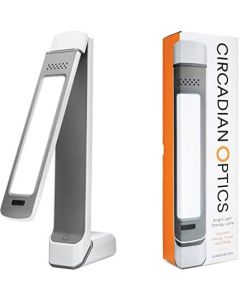
This guide covers the Circadian Optics Lumos 2.0 Light Therapy Lamp. The catalog identifies a rotating panel and a claimed 10,000-lux output; follow the exact product instructions for distance and timing. This is not medical advice or a diagnosis.
Lux is not the whole buying decision
10,000 lux is commonly referenced for clinical light boxes, but the number only has meaning at a stated distance and with a suitable use routine. A lamp advertised at that output is not a promise that it will treat low mood, fatigue, sleep problems or seasonal depression for every person. Product placement, exposure time, eye health, medicines and underlying symptoms matter.
| Check | Why it matters | What it does not establish |
|---|---|---|
| Claimed 10,000-lux output | It signals the product is intended for bright-light use rather than ordinary task lighting. | Safe or effective exposure at every distance, duration or for every user. |
| Rotating panel | Helps aim the lamp according to the maker’s setup instructions. | Permission to stare directly into the light. |
| Morning workspace routine | Can make a consistent setup easier to maintain. | A replacement for sleep, daylight, mental-health care or medical treatment. |
| UV filtering and product guidance | Important features to verify on the exact model. | A reason to ignore eye conditions or photosensitising medication. |
Who should pause before buying
Do not treat a light box as a harmless desk accessory if you have bipolar disorder, a retinal or other eye condition, recent eye surgery, or take medication that increases light sensitivity. The NCCIH and NIMH both flag these as reasons to discuss light therapy with a clinician or use it under medical supervision. Headache, nausea, tired eyes and dizziness can occur; stop rather than pushing through adverse effects.
Persistent low mood, loss of interest, major sleep disruption, suicidal thoughts or a marked seasonal pattern deserve professional assessment. A consumer lamp cannot determine whether symptoms are seasonal affective disorder, another form of depression, medication effects, a sleep disorder or a physical-health issue.
Use the manufacturer instructions, not a generic internet prescription
NIMH describes a typical clinical light-box routine as bright light in the morning for about 30–45 minutes, but that is not a universal setting for every device. The maker’s specified distance and schedule control the dose received. Keep eyes open without looking directly into the light, and do not improvise a longer or closer exposure because “more” sounds better.
For the Lumos 2.0, confirm the current manual, warranty, output distance, UV information and whether the model is appropriate for the country’s electrical setup. The rotating panel is useful only if it allows a stable, comfortable position while you work, read or eat breakfast.
Two different morning problems
- Dim desk, normal wellbeing: ordinary task lighting, a window position or a brighter workspace may solve the problem without a therapy lamp.
- Recurring seasonal symptoms discussed with a clinician: a properly specified light box may be one treatment option within a plan, not a stand-alone promise.
- Uncertain symptoms or a relevant health condition: pause the purchase and get individual advice first.
A conservative setup checklist
- Read the exact manual and confirm the intended distance, duration and placement.
- Set the lamp up in the morning routine rather than using it randomly late in the day.
- Keep it out of direct line of sight and reassess if discomfort appears.
- Review eye conditions, bipolar history and medications with a qualified clinician before starting when relevant.
- Do not use a lamp to delay care for depression or other significant symptoms.
Questions buyers should ask
Can this lamp treat depression?
Only a clinician can advise treatment for an individual. Light therapy has been studied for winter-pattern SAD, but a product listing cannot diagnose or guarantee an outcome.
Is 10,000 lux enough information?
No. Ask at what distance it is measured, whether UV filtering is documented and what the exact manual recommends.
Should I look directly at the light?
No. Follow the manufacturer’s positioning guidance; clinical guidance generally says to keep eyes open without staring into the light.
Who needs medical advice first?
People with eye disease, recent eye surgery, bipolar disorder, light-sensitive conditions or medicines that increase photosensitivity should seek professional advice.
The safe conclusion
The Lumos 2.0 may suit a carefully planned morning-light routine when its instructions and your health context fit. It is not a generic cure for winter fatigue or a substitute for care. If the health question is uncertain, the sensible next accessory is not another lamp—it is informed advice.
Sources: NIMH seasonal affective disorder guidance; NCCIH safety information. As an Amazon Associate we earn from qualifying purchases.
Comments